|
|
|
Wholesalers: |

|
/ |
|
|
|
|
|
|
|
|
| "No one lights a lamp and puts it in a place where it will be hidden, or under a bowl. Instead he puts it on its stand, so that those who come in may see the light." Jesus Christ |
|
|
|
|
|
|
|
|
|
|
|
|
|
|
|
|
|
|
|
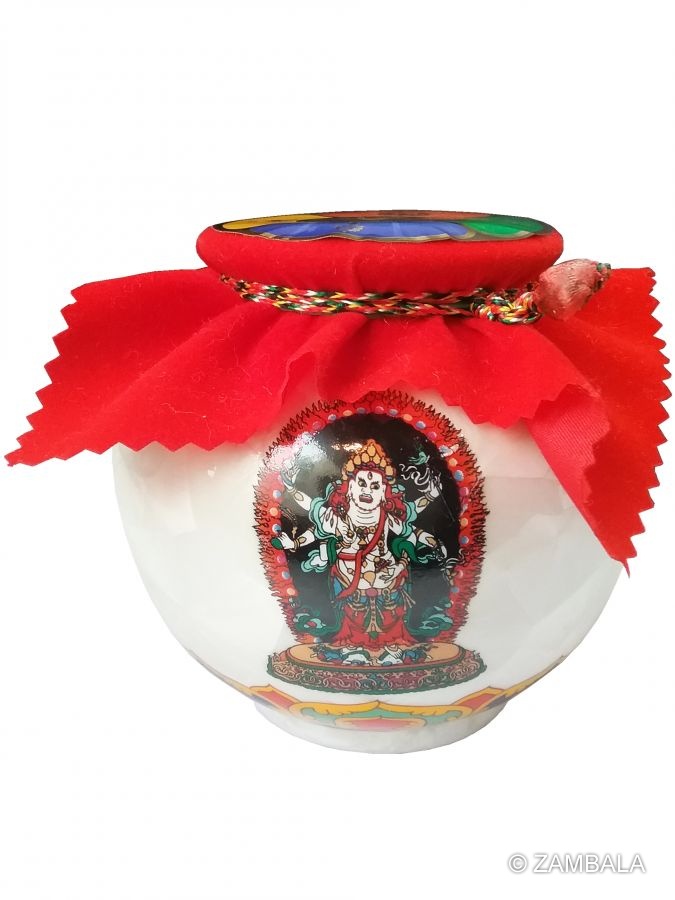
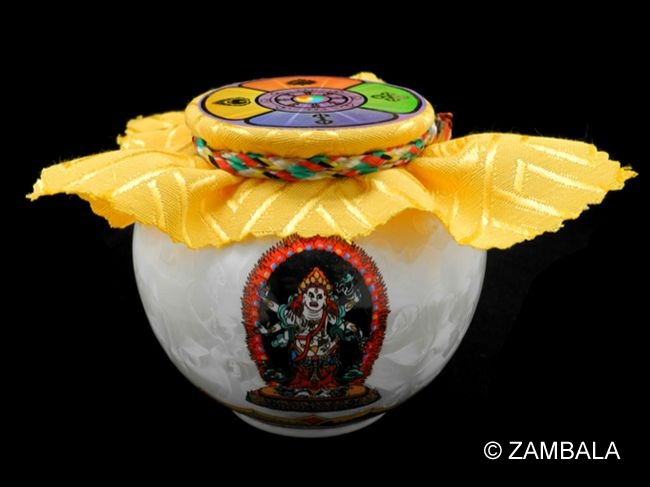
| White Mahakala Treasure Vase (S) |
|
|
|
|
|
Sku#:0932-WM
|
|
《In order to view the wholesale price .
Please Apply to be a wholesalers》
|
|
|
|
|
 |
|
Please contact us to verify availability. 1-626-354-6228
Email: zambalallc@gmail.com
America area customers can view on this website first.
https://FlyingMystics.org/ |
|
|
|
|
|
|
Material: Ceramic (Completed by a professional lama of this association through mantra chanting and consecration)
Dimensions: Maximum diameter approximately 10 cm, height approximately 9.5 cm
Description: The Six-Armed White Mahakala (Tibetan: གོན་པོ་ཡིད་བཞིན་ནོར་བུ་, meaning "White Wish-Fulfilling Jewel Protector" or "White Wish-Fulfilling Protector") is an important wealth protector deity in Tibetan Buddhism, a compassionate and wrathful emanation of Avalokiteshvara (Four-Armed Avalokiteshvara). He manifested this form out of compassion for sentient beings suffering from poverty, specializing in attracting wealth, merit, longevity, and fame; he belongs to the wisdom protector category of increasing blessings.
Its lineage originated with great Indian masters (such as Shavalipa or Rahula Gupta), later spreading to Tibet, primarily propagated in the Shangpa Kagyu school, where it is the school's main wealth deity and protector. Later, through the integration of the Sakya school's founders, such as Kunga Sunan, it became a unique practice (special tradition) of the Sakya school. It is said that this deity resides in the cool charnel grounds of India. The Gelug school and other schools also have a tradition of practicing White Mahakala, but the six-armed white form is most prevalent in the Shangpa Kagyu and Sakya schools.
**The Yangdzong (or Wealth Treasure Vase)** is an ancient Tibetan Buddhist ritual implement embodying the gathering of wealth. Vases featuring the six-armed White Mahakala as the main deity are particularly famous (such as the version made at Sakya Monastery). The vase is filled with jewels, medicinal herbs, sacred objects, mantras, and images of wealth deities. It is blessed and empowered by a high-ranking monk through strict rituals (such as the White Mahakala practice), symbolizing the palace and wealth energy of the deity, attracting abundance and auspiciousness.
How to Properly Offer It
Offering to the Six-Armed White Mahakala Vase requires a pure and Bodhicitta mind. It is considered a transcendental protector (not a worldly deity), with the purpose of benefiting all beings, not purely for personal gain. The following are common correct methods:
1. **Placement:** Place it in a high and clean location in your home shrine (such as the wealth corner or northeast direction), avoiding low places, bedrooms, or near the toilet. The vase should be sealed and not opened or moved frequently.
2. **Daily Offerings:**
- Offer fresh flowers, water, incense, lamps, and food (such as tea, milk, yogurt, and sweets) daily.
- Recite the mantra: **Om Mahakalaya Soha**, or the specific White Mahakala mantra.
- Visualize the deity descending, summoning a rain of wealth, while simultaneously aspiring to benefit all sentient beings.
3. **Special Practices**:
- Participate in or practice the White Maha Kala fire puja and tsog offering rituals independently.
- Cultivate the intention to give alms, uphold precepts, and avoid killing and attachment/anger.
- If you have received empowerment and lineage transmission, you can practice deity yoga; those without transmission should focus on prayer and offerings.
When offering, emphasize inner transformation: wealth is not merely material, but a resource for the growth of merit and wisdom. Wrong motives (such as purely seeking wealth) may be ineffective or create obstacles.
Meaning and Influence in Tibetan Buddhism
- **Meaning**:
- **Manifestation of Compassion**: Outwardly wrathful (three eyes, fangs, six arms holding a jewel), inwardly filled with great compassion, symbolizing the swift subjugation of obstacles, poverty, and demonic hindrances.
- **Symbol of Wealth:** Holding a wish-fulfilling jewel, vase, and skull bowl, it represents attracting wealth from the three realms, increasing wisdom through study, contemplation, and meditation, and perfecting the six perfections (the six arms symbolize the six paramitas).
- **Enhancing Activities:** Assists practitioners in the four activities of pacifying, increasing, attracting, and subduing evil, especially increasing wealth, longevity, and eliminating poverty.
- **Transforming the Five Poisons:** The white form represents transforming greed into wisdom, surpassing the purely subduing form of Black Mahakala, leaning more towards peaceful enhancement.
- **Impact:**
- In Tibetan Buddhism, White Mahakala is the preferred protector for seeking wealth. Many monasteries (such as Sakya Monastery) and families enshrine his vase to attract auspiciousness and balance environmental energy.
- Historically, it assisted many masters (such as Kyungpo Ngawang) in building monasteries and propagating the Dharma, symbolizing the support of wealth and resources for the Dharma.
- In modern times, its influence is widespread, used for abundance in homes and businesses, emphasizing both inner satisfaction and external prosperity, helping practitioners accumulate merit and quickly attain siddhi.
This method is exceptionally auspicious; it is recommended to seek guidance from a qualified master to ensure proper practice.
Note: This item requires complete dedication and sealing. It should not be opened. If opened, the dedication of the vase is lost, and its magnetic properties are dispelled.
|
|
|
 |
|
|
|
|
|
|
|
|
|
|
|
|
|
|
|
|
© 2026 Zambala inc. All Rights Reserved. No part of this site may be reproduced without our written Permission.
Service Mail: ZambalaLLC@gmail.com
Phone: (626) 289-9787 or 1(888)Zambala (926-2252)
Fax: (626) 289-9719
1904 West Valley Blvd. Alahambra, CA 91803 USA
Unless stated otherwise in content's license. Design By
|
|
|