|
|
|
Wholesalers: |

|
/ |
|
|
|
|
|
|
|
|
| He who does not trust enough, Will not be trusted. - Lao Tzu. China taoist philosopher, BC 600 |
|
|
|
|
|
|
|
|
|
|
|
|
|
|
|
|
|
|
|
|
|
|
|
|
Sku#:0561
|
|
《In order to view the wholesale price .
Please Apply to be a wholesalers》
|
|
|
|
|
 |
|
Please contact us to verify availability. 1-626-354-6228
Email: zambalallc@gmail.com
America area customers can view on this website first.
https://FlyingMystics.org/ |
|
|
|
|
|
|
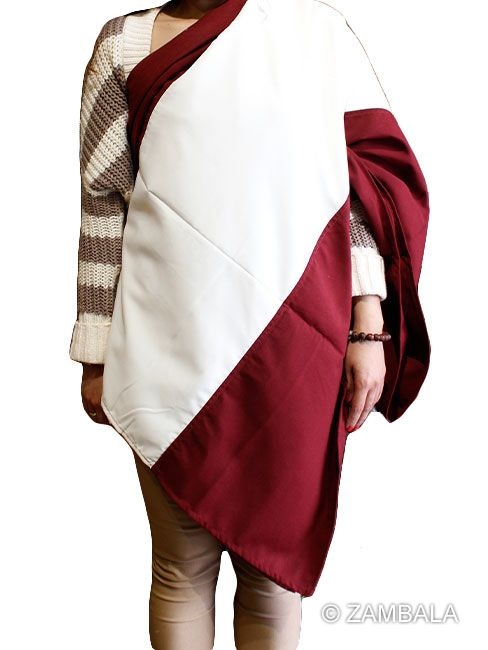
Material: Blended fabric, pure cotton, thick shawl
Size: 275 x 100 cm
Description: The origin, history, and usage of the yoga shawl (Yogapatta)
The yoga shawl (Sanskrit: yoga-paṭṭa or yoga-paṭṭikā) is a simple prop used by ancient Indian yogis. It is primarily a long strip of cloth used to assist in prolonged meditation postures. It was widely used in the yoga traditions of Buddhism, Jainism, and Hinduism, especially from the centuries BCE to around the 5th century CE.
Origin and History
- The earliest written record appears in the commentary on the *Pātañjala Yoga-sūtra* (c. 400 BCE–400 CE), where Patanjali mentions "yoga-paṭṭa" as one of the tools to assist in meditation in Chapter 3 (Meditation) of the *Yoga Sutras*. - Archaeologically, the most famous evidence comes from the reliefs at Buddhist sites such as Bharhut (2nd century BCE), Sanchi (1st century BCE), and Amaravati. Many bodhisattvas, Buddhas, or ascetics in meditation are clearly depicted using a cloth strip wrapped around their knees and back to maintain their seated posture; this is the yoga shawl.
- Jain Mathura sculptures also depict Tīrthaṅkara using a yoga shawl for meditation.
- The emergence of this tool primarily stemmed from the need for prolonged seated meditation in the ancient Indian ascetic tradition (śramaṇa). Since modern meditation cushions or chairs did not exist at the time, prolonged lotus postures could easily lead to elevated knees, lumbar lordosis, pain, or distraction.
How to Use a Yoga Shawl: The method of tying a yoga shawl is simple yet extremely practical, with two main common methods:
1. The most common method (see Sanchi and Amaravati reliefs):
- The practitioner assumes the lotus position (lotus seat or half-lotus seat).
- A strip of cloth, approximately 2-3 meters long and 5-10 centimeters wide, is wrapped around the back, with both ends pressed below the knees, then pulled tight and knotted or tucked behind the back.
- Effect: Forces the knees downward, making it easier for the pelvis to tilt backward and the spine to straighten naturally, while reducing the burden on the knees and lower back during long meditation sessions.
2. A less common method:
- The cloth strip is wrapped around the back, then across the knees and secured. Sometimes it is also wrapped around the ankles, creating a more stable "binding" position.
This cloth strip is usually made of cotton or linen, with no specific color requirement (early versions were mostly white or natural colors), and is not part of the monastic robes; it is purely a meditation aid.
Profound Influence on Buddhism
1. Symbolizing "Diligence" and "Precepts":
- The yoga shawl itself symbolizes the practitioner's willingness to use all "skillful means" to combat physical and mental laziness and distraction, embodying the spirit of "Diligence Paramita" (the perfection of diligence).
- In early Buddhist art, almost all images of Buddhas or Bodhisattvas in meditation (especially during Shakyamuni's ascetic practices before enlightenment) wear yoga shawls, reinforcing the visual language that "meditation is the necessary path to enlightenment."
2. Becoming the Standard Image of "Meditating Bodhisattvas":
- In Gandharan and Mathura art, almost all Bodhisattvas depicting the "first to fourth jhanas" wear yoga shawls, making it immediately clear to the viewer that the image represents a state of "meditation."
- This influenced the basic form of the "meditation mudra Buddha" in later East Asian Buddhist art (although it was gradually simplified after the Tang Dynasty, with the shawl being omitted or transformed into clothing folds).
3. Practical Impact:
- In the forest traditions of Theravada Buddhism (Thailand, Southeast Asia), a few monks still use similar cloth straps to assist with prolonged sitting, called "yoga straps" or "meditation straps."
- In some retreat traditions of Tibetan Buddhism, similar ropes or wooden meditation boxes (sgom thag, sgom khri) are used. Their principle is the same as that of the yoga shawl, both aimed at helping practitioners maintain a stable sitting posture during long retreats of three years, three months, and three days.
Modern Continuation and Variation
- Similar meditation straps can still be seen today in India, Theravada Buddhist countries, and some Tibetan Buddhist monasteries.
- In the modern yoga market, manufacturers also produce replicas of the ancient "yoga strap" or "meditation belt," with almost identical functions.
- In the Japanese Soto Zen school of Zen meditation, although cloth straps are not used, "meditation boards" or strict rules of discipline are employed, all aimed at overcoming the physical difficulties of prolonged sitting, maintaining a spiritual continuity.
In summary, although the yoga shawl is just a simple strip of cloth, it is one of the most representative "technologies" in ancient Indian meditation culture. It not only solved physiological problems, but also became a strong symbol of "meditation" and "diligence" in Buddhist art and doctrine, with a far-reaching influence that continues to this day.
|
|
|
 |
|
|
|
|
|
|
|
|
|
|
|
|
|
|
|
|
© 2026 Zambala inc. All Rights Reserved. No part of this site may be reproduced without our written Permission.
Service Mail: ZambalaLLC@gmail.com
Phone: (626) 289-9787 or 1(888)Zambala (926-2252)
Fax: (626) 289-9719
1904 West Valley Blvd. Alahambra, CA 91803 USA
Unless stated otherwise in content's license. Design By
|
|
|