|
|
|
Wholesalers: |

|
/ |
|
|
|
|
|
|
|
|
| "The greatest gift is to give people your enlightenment, to share it. It has to be the greatest." Shakyamuni Buddha (563-483 B.C.) |
|
|
|
|
|
|
|
|
|
|
|
|
|
|
|
|
|
|
|
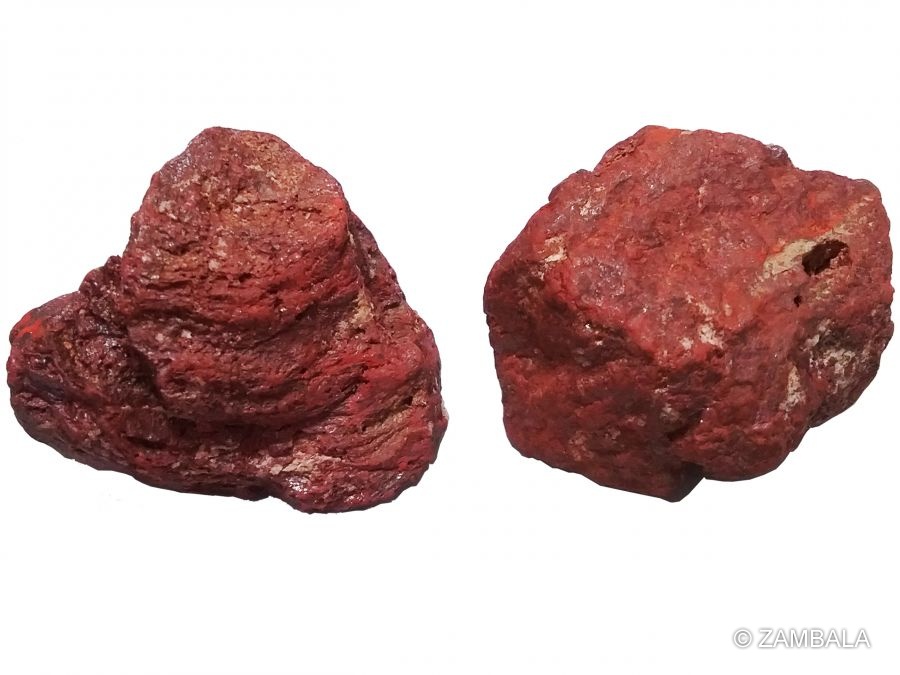
| Tumbled Cinnabar natural stone |
|
|
|
|
|
Sku#:3185
|
|
|
Wholesale price |
US |
XXX.XX |
|
《In order to view the wholesale price .
Please Apply to be a wholesalers》
|
|
|
|
|
 |
|
Please contact us to verify availability. 1-626-354-6228
Email: zambalallc@gmail.com
America area customers can view on this website first.
https://FlyingMystics.org/ |
|
|
|
|
|
|
Material: Cinnabar, Raw Ore
Size: 192 grams
Description: Cinnabar (chemical name: **mercury sulfide**, HgS), also known as vermilion, is one of the most important "red gemstones" in traditional Chinese mineral medicine and pigments. It has been used since the late Neolithic period (approximately 7000 years ago) and is a core substance of the "red faith" in Chinese culture, especially after the introduction of Buddhism, where it underwent a profound integration with Tibetan Buddhism and Han Chinese Tantric Buddhism.
I. Composition and Physicochemical Properties
- **Main Component**: α-mercury sulfide (α-HgS), crystallized in a bright red, rhombic crystal system, with a Mohs hardness of 2.5, possessing an adamantine luster, gradually darkening upon exposure to light (turning to black Metacinnabar).
- **Origin**: The most famous historical production area in China was "Chenzhou" (present-day Yuanling and Chenxi areas of Hunan Province), hence the name "Cinnabar". The Tongren and Wanshan mercury mines in Guizhou Province are also major modern production areas. - **Toxicity**: Contains highly toxic mercury, referred to by the ancients as "the Yin of Stone." The *Compendium of Materia Medica* records that "long-term use leads to immortality," but in reality, prolonged exposure can cause mercury poisoning. Its use is strictly limited in modern times.
II. Significant Applications and Influences in Buddhist Culture
After Buddhism was introduced to China, cinnabar was given an extremely high religious status, becoming a precious treasure for "warding off evil, protecting the Dharma, and bestowing blessings," especially in the following areas:
1. **The "Cinnabar Ceremony" in Tibetan Buddhism (Vajrayana)**
**Consecration of Red Buddha Statues**: Cinnabar (Tibetan: mtshal) is the most precious red pigment in almost all Tibetan Buddhist bronze Buddha statues and Thangka paintings. The Nyingma and Kagyu schools use cinnabar to dot the Buddha's eyes during consecration (the eye-opening ceremony), symbolizing bestowing upon the Buddha the "eye of wisdom."
- **Cinnabar Pills (རིལ་ནག / ril nag)**: Tibetan medicine and Tantric Buddhism often use cinnabar to make "Zota (བཙན་ཐང) Precious Pills," considered a supreme blessed medicine, said to "dispel demonic obstacles and prolong life by a hundred years." Cinnabar pills given to the Dalai Lama and Karmapa are priceless in the hearts of Tibetans.
- **Mandala Offering**: During high-level initiations such as Kalachakra and Hevajra, cinnabar is used to draw the border of the mandala, representing "indestructible Vajra."
2. **"Cinnabar Amulets" in Chinese Tantric Buddhism**
- **Cinnabar-Written Amulets**: After the rise of Tantric Buddhism in the Tang Dynasty, the "Cinnabar Amulet Method" brought back by the Japanese Shingon sect master Kūkai has been circulating in China to this day. While Taoism also uses cinnabar, Esoteric Buddhism emphasizes that "cinnabar is the blood of Vairocana Buddha":
"Cinnabar is the blood of Vairocana Buddha used to subdue demons. When writing talismans, one must dip a willow wood brush in cinnabar and recite the fundamental mantra of Vairocana Buddha."
****Cinnabar Talisman for Warding Off Seven Evils:** A common talisman in Han Chinese Buddhism for warding off evil spirits, it is always written in cinnabar and pasted on the central door. It is said to suppress "Seven Evils, Year Breaker, and Calamity Evil."
3. **"Cinnabar Red" in Buddhist Art**
- The red color in the murals of the Mogao Grottoes, Yungang Grottoes, and Longmen Grottoes in Dunhuang is almost entirely cinnabar (confirmed by modern spectral analysis).
- The "mineral red" in the murals of Yongle Palace and Fahai Temple is also cinnabar. Because it never fades, it is called "thousand-year cinnabar, ten-thousand-year painting."
- Over 90% of the red color in the Thangka paintings of the Potala Palace and Norbulingka in Tibet uses natural cinnabar.
4. **Special Buddhist Objects**
- **Cinnabar Rosary**: A 108-bead cinnabar rosary in Tibetan Buddhism is extremely precious, said to "enhance the power of mantras." A single old cinnabar bead can fetch hundreds of thousands of RMB at auction.
- **Cinnabar Pagoda**: Some pagodas in Yunnan and Tibet contain cinnabar as a "treasure to protect the pagoda," symbolizing the "indestructible Dharma body."
III. Records of Cinnabar in Buddhist Scriptures
- *Mahavairocana Sutra Commentary*, Volume 14: "Cinnabar is the color of the Buddha's compassionate blood, capable of breaking all demonic obstacles."
- *Kalachakra Tantra* records: Offering cinnabar, gold, turquoise, and other nine precious stones can attain the indestructible Vajra body.
- *Susiddhi Sutra*: "Writing mantras with cinnabar and placing them at the four gates of the mandala can cause the four demons to retreat."
IV. Current Status of Cinnabar Use in Modern Buddhism
- Tibetan Buddhism: Natural cinnabar is still widely used to make blessed pills, but due to mercury toxicity issues, some monasteries have switched to synthetic mercuric sulfide (vermilion). - Han Chinese Buddhism: The Shingon sect in Taiwan, Hong Kong, and Japan still insists on using cinnabar to write amulets. Master Hsing Yun once said:
"A stroke of cinnabar makes ghosts and spirits retreat; a dot of cinnabar illuminates the Buddha's light."
- Cultural Relics Protection: The Palace Museum and Dunhuang Academy in mainland China have completely banned the use of mercury-containing cinnabar in restoration, replacing it with synthetic pigments.
Summary: In Buddhist culture, cinnabar is not only a pigment and medicine, but also "the blood of Buddha's compassion and a symbol of indestructibility." From Tibetan cinnabar pills to Han Chinese cinnabar amulets, from Dunhuang murals to Potala Palace Thangkas, this touch of "Chinese red" carries a thousand years of faith and still shines in every corner of the Buddhist world. However, modern people must be wary of its high toxicity, and a balance must be struck between religious fervor and scientific safety.
.jpg)
|
|
|
 |
|
|
|
|
|
|
|
|
|
|
|
|
|
|
|
|
© 2026 Zambala inc. All Rights Reserved. No part of this site may be reproduced without our written Permission.
Service Mail: ZambalaLLC@gmail.com
Phone: (626) 289-9787 or 1(888)Zambala (926-2252)
Fax: (626) 289-9719
1904 West Valley Blvd. Alahambra, CA 91803 USA
Unless stated otherwise in content's license. Design By
|
|
|