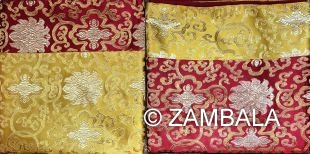
Material: Embroidery. Cloth.
Size: 100 X 100 cm
Description:
The Cross Vajra (Sanskrit: Vishva-vajra, Tibetan: rDo-rje-rgya-gram) is an important instrument in Tibetan Buddhism, with profound symbolic meaning and historical background. It is composed of two cross-vajra, and its shape is similar to the "cross", hence the name. This instrument originated from ancient India. It was originally a weapon, and was later absorbed by Tantra as a religious instrument, symbolizing indestructible wisdom and power.
**Story and Origin**
In ancient Indian legends, there was an immortal named "Qinlao". After his death, his bones turned into diamond bones. Indra used these bones to make a vajra as a powerful weapon. Later, the vajra was absorbed by Tantra and became a tool for practitioners to cut off troubles and eliminate obstacles.
**Symbolism**
The four heads of the cross vajra represent the east (white), south (yellow), west (red), and north (green), and each color has a specific symbol:
- **White (East)**: Eliminates disease, suffering, and ignorance.
- **Yellow (South)**: Increases life, blessings, wealth, and wisdom.
- **Red (West)**: Gathers wealth and power between heaven and earth.
- **Green (North)**: Cuts off obstacles in practice and achieves liberation.
In addition, the center of the cross vajra is usually blue, symbolizing the achievement of all undertakings. It is regarded as a symbol of stability and immovability in Tantric practice, representing the unshakable state of samadhi (meditation).
This instrument is not only used in rituals, but is also commonly seen in the design of mandala, as a support or foundation, symbolizing the stability of Buddhism and the indestructible wisdom. |
|